Metal Roof Repair After Harsh Ohio Winters: A Timeline for Columbus Buildings
Salesville, United States – April 16, 2026 / Top Notch Commercial Roofing /
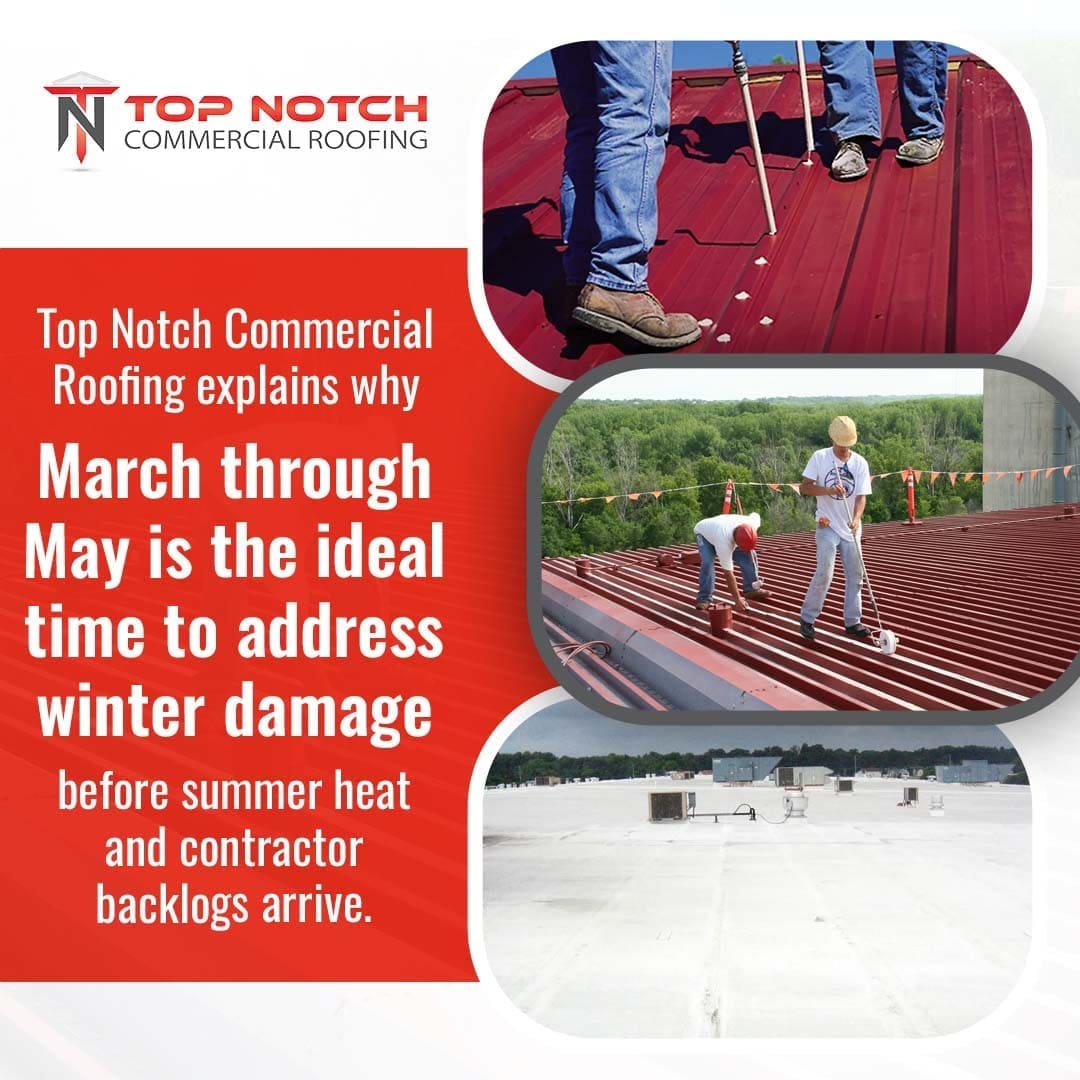
Columbus, OH – Top Notch Commercial Roofing announces an optimal spring repair timeline for Central Ohio commercial property owners facing metal roof damage from harsh winter conditions. The company identifies March through May as the critical window for addressing freeze-thaw damage, thermal expansion failures, and snow load stress before summer scheduling bottlenecks and extreme temperatures complicate restoration work.
Winter weather throughout Central Ohio created specific damage patterns on commercial metal roofing systems through repeated thermal expansion cycles, ice dam formation, and salt corrosion acceleration. Industry data shows commercial buildings that defer spring assessments face 30-50% premium pricing for emergency repairs later in the year, making proactive evaluation financially strategic for property managers.
Why Metal Roof Repair in Columbus, OH Must Occur Before Summer Heat
Temperature requirements for metal roof coatings drive seasonal scheduling considerations. According to ASTM coating application standards, as cited in DeFelsko, most coating systems require minimum sustained temperatures of 40-50°F during application, with surface temperatures at least 5°F above the dew point to prevent condensation during curing. Applying coatings below these thresholds causes poor adhesion and premature failure.
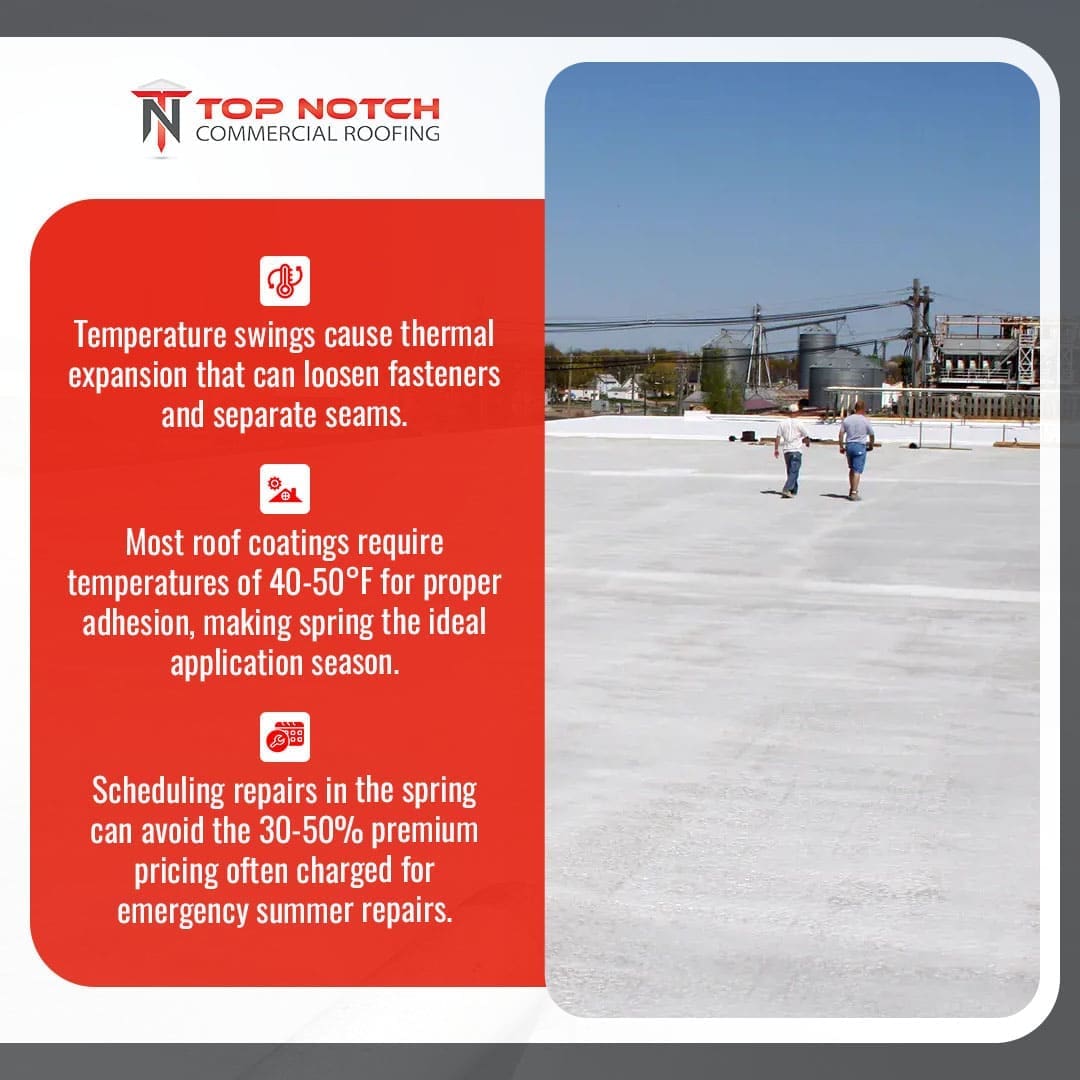
March through May in Columbus provides consistent daytime temperatures between 55 and 75°F that create ideal conditions for both mechanical repairs and coating applications. Summer heat exceeding 125°F causes coatings to dry too quickly and creates application defects that compromise system performance.
Contractor availability represents another critical factor. Based on employment statistics from the Bureau of Labor Statistics in the construction sector, the activity of roofing contractors reaches its highest levels during the warmer months, with spring serving as the transitional phase when demand noticeably increases before the scheduling challenges of summer arise.
Metal roofing contractors in Columbus, OH, like Top Notch Commercial Roofing, experience significantly higher demand from June through August. By summer, most competent contractors carry full schedules extending 6-8 weeks into the future.
Columbus’s spring weather provides a higher probability of dry work days compared to the summer thunderstorm season. U.S. Climate Data for Columbus, Ohio, indicates March averages 11-12 precipitation days, while spring precipitation typically arrives as steady rain that forecasters predict 48-72 hours in advance, allowing contractors to plan around weather systems.
Winter Damage Patterns Requiring Immediate Professional Assessment
Commercial metal roofing systems experience thousands of expansion-contraction cycles each winter. Steel has a thermal expansion coefficient of 0.0000065 per °F, meaning a 100-foot panel experiencing a 100°F temperature change expands nearly 0.78 inches. Ohio winter temperature swings of 60-70°F between afternoon highs and overnight lows create continuous fastener movement that works screws loose from deck materials and fails seal integrity.
Top Notch Commercial Roofing identifies critical inspection points, including:
-
Raised fastener heads sitting 1/16 inch or more above panel surfaces
-
Panel seam separation appearing as gaps between panel edges
-
Ice dam damage along the roof edges where heated spaces meet unheated overhangs
-
Thermal shock cracking in coatings on roofs older than 15 years
-
Salt corrosion accelerated by road aerosols near major highways
Buildings within a half-mile of major roadways experience accelerated corrosion. Galvanized coatings designed for 25-year life in rural settings often fail in 12-15 years near roadways as snow piles retain salt for weeks, driving salty moisture into panel overlaps and fastener holes.
|
Damage Type |
Typical Indicators |
Repair Urgency |
|
Fastener Back-Out |
Raised screw heads, loose panels |
High—allows water intrusion |
|
Seam Separation |
Visible gaps 1/8 to 1/4 inch |
Moderate – monitor progression |
|
Edge Flashing Failure |
Separated materials, missing sealant |
High—causes interior damage |
|
Surface Corrosion |
Rust spots under 1 square inch |
Low – responds to coating |
How Professional Metal Roof Installers Execute a Four-Week Restoration Timeline
Qualified metal roof installers follow a structured timeline that minimizes disruption while maximizing repair quality. The process begins with a comprehensive inspection, spending 2-4 hours examining every roof section, testing fastener integrity, measuring seam gaps, and photographing defects.
Week one focuses on damage documentation. Qualified inspectors provide reports within 48 hours that quantify damage with specific measurements rather than vague descriptions. Week two involves proposal review and contractor selection based on detailed scope descriptions, material specifications, and project timelines with weather contingencies.
Material procurement and site preparation occur during week three. Metal roofing materials often require 7-14 day lead times, while contractors establish roof access points, install safety equipment, and coordinate with building occupants. Week four involves repair execution, with experienced crews completing most commercial restoration projects in 3-5 working days.
Top Notch Commercial Roofing recommends scheduling assessments in February for March execution, securing availability before prime season fills contractor calendars. This approach aligns with new fiscal year capital expenditure allocations, allowing proper budgeting versus emergency repairs that exceed contingency funds.
Cost Analysis for Commercial Roofing Contractor Services
Panel replacement costs more per square foot than coating restoration but provides longer service life. Coating restoration offers substantial savings while extending roof life 15-20 years when substrate condition remains sound. The choice depends on the remaining substrate condition, overall roof age, and building ownership timeline.
Coating restoration makes sense for roofs with 50% or more remaining substrate life. Extensive corrosion affecting 30% or more of the panel area typically justifies replacement. Modern coating systems with solar reflectivity reduce cooling costs by 15-25%, substantially improving project return on investment.
Emergency repairs cost a 30-50% premium over standard rates. Emergency pricing compensates contractors for schedule disruption, after-hours labor, and rushed material procurement. Annual spring inspections from a commercial roofing contractor identify developing problems before they cause interior damage requiring immediate response.
Schedule Your Complimentary Post-Winter Assessment
Top Notch Commercial Roofing provides comprehensive metal roof inspections for commercial buildings throughout Columbus, Zanesville, Cambridge, Athens, and Central Ohio. Certified teams document every defect, explain repair options clearly, and develop realistic timelines that work within operational constraints. Property managers can call (740) 409-1171 today to schedule complimentary assessments and receive detailed proposals with multiple solution options that protect building investments before small problems become expensive emergencies.


Contact Information:
Top Notch Commercial Roofing
20217 Leatherwood Rd
Salesville, OH 43778
United States
Joe Burkholder
https://topnotchroofingohio.com/
Original Source: https://topnotchroofingohio.com/metal-roof-repair-after-harsh-ohio-winters-a-timeline-for-columbus-buildings/