
Key Takeaways:
- Flyer response rates (2.7%-4.4%) significantly outperform email marketing response rates (0.6%), making physical ads a powerful conversion tool.
- Physical marketing materials produce up to 70% more brand recall than digital ads, thanks to the sensory experience of holding something tangible.
- Flyers do not replace digital marketing – they strengthen it, especially when paired with QR codes and social media integration.
- For small businesses on a budget, flyers offer one of the lowest cost-per-impression options available, starting as low as $0.15-$0.35 per unit at volume.
- Keep reading to find out why an underutilized channel like flyer marketing could be the edge a business is missing – and how to use it smartly.
Every small business owner has heard some version of the same advice: go digital, run social ads, build an email list. And while those strategies absolutely have their place, a quiet counterargument has been building for years. Physical advertising – particularly flyer marketing – is not just surviving in the digital age. In many measurable ways, it is outperforming it.
Flyers Outperform Digital Ads Where It Counts
Attention is the real currency of marketing, and digital channels are running dangerously low on it. The average person is served thousands of ads daily across their devices. Banner blindness is real. Ad blockers are widespread. Inboxes are flooded.
Flyers operate in a completely different environment – one where competition is low, attention is high, and a message does not have to fight an algorithm to get seen. That fundamental difference is what makes physical advertising so persistently effective, even for businesses that are otherwise fully invested in digital strategies. Agencies like Special Interest Marketing and Advertising in the Bay Area have long championed this balance, helping businesses use print and physical media not as a fallback, but as a deliberate, high-performing channel.
The Numbers Do Not Lie
Response Rates vs. Email
The data here is difficult to ignore. Flyer response rates range from 2.7% to 4.4%, compared to just 0.6% for email marketing. Printed flyers also achieve open rates of 80% to 90% – three to four times better than the average email open rate. When a flyer is placed in someone’s hands, it gets seen. That is not guaranteed with a subject line competing against dozens of others in an inbox.
Brand Recall Advantage
Physical marketing materials engage more of the sensory system – their weight, texture, and presence in the real world create stronger neural connections. Research into the psychology of marketing suggests this leads to 70% more brand recall than digital ads. That advantage stems from the way physical objects become part of a person’s environment, rather than a fleeting distraction on a screen.
What Makes Physical Ads Hard to Ignore
Tangibility Forces Attention
There is something unavoidable about a piece of paper in hand. A flyer cannot be scrolled past. There is no skip button. Even a glance – just a second or two – represents more genuine engagement than most digital impressions ever produce. That moment of physical contact creates a pause that online ads simply cannot manufacture. A well-designed flyer with a clear message and a compelling offer capitalizes on that pause, turning a brief glance into a real lead.
Less Competition, More Visibility
Running a Google Ads campaign means competing against every other business bidding on the same keywords. With a flyer, there is no auction, no algorithm, and no competitor ads appearing alongside the message. When someone receives a flyer, that brand owns the moment entirely. That exclusivity of attention is almost impossible to replicate in a digital environment.
Direct, Physical Presence Where Customers Already Are
Flyer marketing excels at one thing digital targeting struggles to truly replicate: hyper-local reach. A neighborhood restaurant, a local gym, a boutique service business – these do not need national reach. They need to reach the people within a few miles who are most likely to walk through their doors.
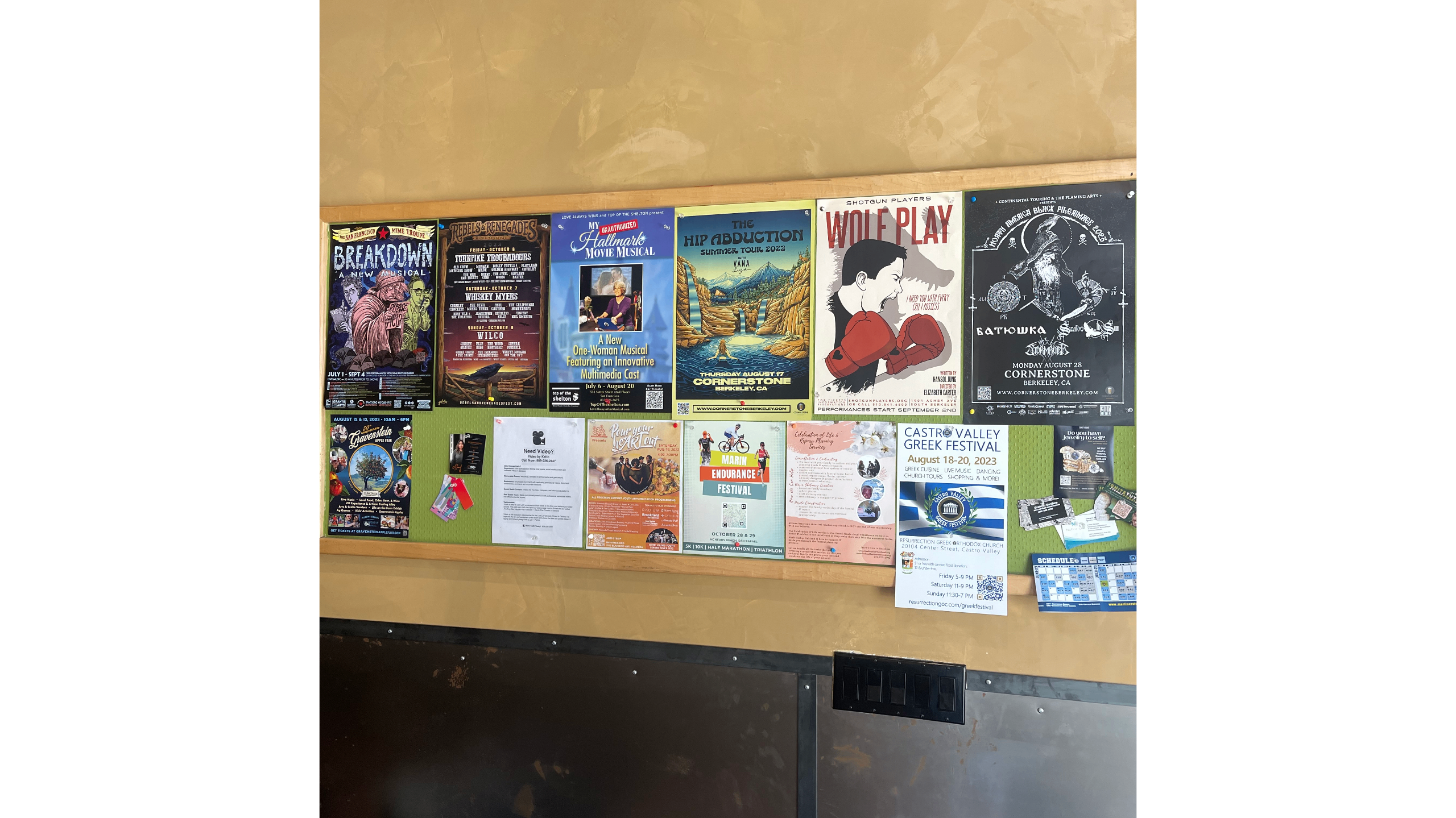
Distributing flyers in high-traffic community areas, local bulletin boards, coffee shops, or directly door-to-door puts a business’s message exactly where its potential customers already are – without relying on an algorithm to deliver it. Face-to-face distribution adds another dimension entirely. Personal, human interaction during flyer distribution creates a level of trust and memorability that a banner ad simply cannot replicate.
Strong ROI Through Engagement, Recall, and Conversion
Cost-Effectiveness in Real-World Results
For small businesses watching every dollar, flyer marketing offers a compelling argument. A standard flyer run of 1,000 units typically costs between $0.15 and $0.35 per flyer. Compare that to the cost-per-click of a competitive Google Ads campaign – often several dollars per click, with no guarantee of conversion – and the math becomes interesting fast. Flyers do not require ongoing spend to keep working. Once printed and distributed, they continue delivering impressions at no additional cost.
Longer Lifespan, Ongoing Exposure
A digital ad disappears the moment the budget runs out or the scroll moves on. A flyer can sit on a kitchen counter for a week, get pinned to a corkboard at the office, or get passed from one person to another. Every additional day that flyer exists in the world is another chance to convert.
Consider the scale at which this works: Uber, through Oppizi, distributed over 3 million flyers across Australia and New Zealand in 2016 and 2017 to build awareness and drive acquisition in competitive local markets. If one of the world’s most digitally sophisticated companies still turns to physical print at that scale, it raises a question worth sitting with.
Flyers Make Digital Campaigns Stronger
QR Codes and Online Integration
Flyers and digital marketing are not opposites – they are partners. A QR code printed on a flyer can send someone directly to a website, a landing page, a social media profile, or an exclusive offer. This bridges the offline and online experience seamlessly, letting a physical touchpoint do the initial heavy lifting before a digital system handles the conversion. Practical examples include:
- A fitness studio distributing flyers with a QR code linking to a discount signup page
- A local cafe running a flyer campaign promoting an Instagram giveaway to grow their online following
- A service business using flyers with a QR code leading to a short video testimonial or portfolio
The result is a marketing loop – physical reach driving digital engagement, and digital engagement feeding business growth.
Flyers Build the Trust Digital Ads Cannot Buy
Trust is in short supply online. Consumers are skeptical of ads, wary of data collection, and exhausted by the sheer volume of digital marketing noise. Physical advertising sidesteps much of that skepticism. 82% of consumers say they trust print advertisements when making important purchasing decisions – making it one of the most trusted marketing channels, outperforming most digital formats. A business that invests in professionally designed, well-printed materials signals legitimacy in a way a retargeted banner ad simply cannot.
An Underutilized Channel That Lets a Business Stand Out
Here is the irony of the digital-first era: because so many businesses have shifted almost entirely online, the physical space is less crowded than it has been in decades. Bulletin boards that used to be packed are half-empty. Mailboxes that used to overflow now receive far less promotional material. The businesses that recognize this gap are finding a channel with real reach, strong recall, and almost no competition for attention.
A well-executed physical flyer campaign can produce meaningful results – one nonprofit saw event attendance rise by 45% after a single, focused distribution effort. The businesses winning with flyers are not abandoning digital – they are adding a layer that digital alone cannot provide: presence in the real world, trust through touch, and visibility in spaces their competitors have quietly abandoned.
Special Interest Marketing & Advertising Inc.
610 16th Street
Suite 76
Oakland
California
94612
United States


