
Key Takeaways
- Monmouth County basements face a high flooding risk due to coastal proximity, clay-heavy soils, and a naturally shallow water table that collectively push water against foundations year-round.
- Hydrostatic pressure is the hidden force behind most basement cracks, wall bowing, and persistent seepage – and it worsens after every major storm.
- Interior waterproofing systems in NJ typically run $2,500-$12,000, while full exterior solutions can exceed $20,000 depending on severity and site access.
- Choosing a contractor with genuine local knowledge of Monmouth County’s coastal conditions – not just a general waterproofer – can be the difference between a lasting fix and a repeat problem.
- Sump pump installation costs, what drives repair bills higher, and how to vet a local contractor are all covered below.
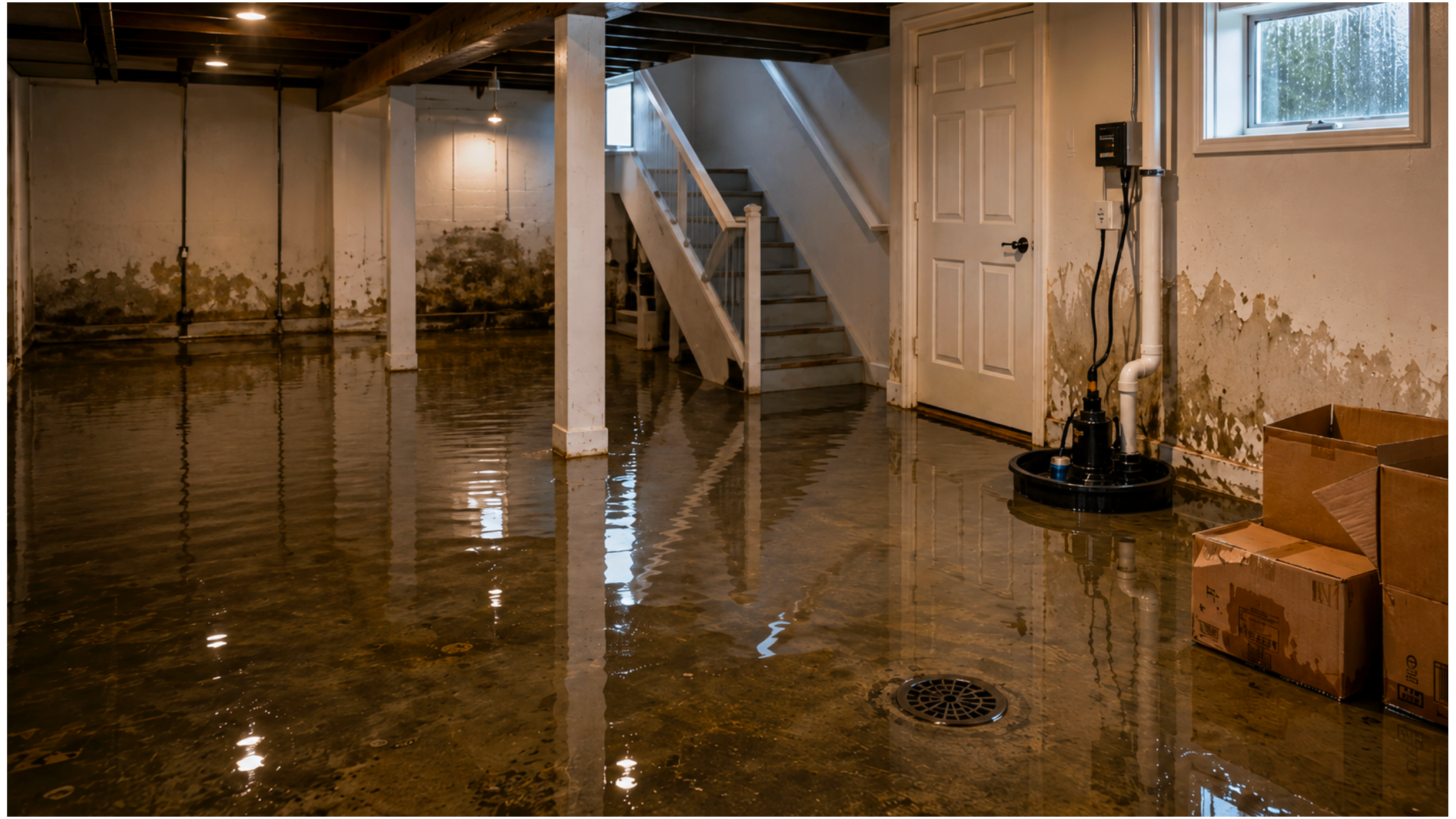
Basement flooding in Monmouth County is a predictable outcome of where this region sits geographically and what lies beneath the soil. Understanding what is actually causing the water to come in is the first step toward spending money wisely on a fix that holds.
Coastal Location, Clay Soils, and a High Water Table Make Monmouth County Basements Vulnerable
Most of New Jersey deals with basement moisture to some degree, but Monmouth County homeowners are working against a stacked deck. Shore proximity means the groundwater table is naturally shallow – in many neighborhoods, it sits just a few feet below grade. When a nor’easter or a stalled storm system drops several inches of rain in a short window, that table rises fast, and water has nowhere to go but sideways, directly into basement walls and floor joints.
The prevalence of clay-heavy soil in much of the county compounds this problem. Unlike sandy soil, which allows water to drain downward, dense clay holds moisture for hours or days after a storm ends. That sustained saturation keeps pressure against foundation walls long after the rain stops. Older homes – especially those built before modern waterproofing standards were common – are particularly exposed, since their drain tiles and sealants have had decades to degrade.
PNE Construction LLC is a licensed basement contractor serving communities across Monmouth County. Their basement services page outlines how shore proximity introduces moisture control requirements that differ significantly from inland homes – a distinction that matters when scoping waterproofing work.
Why Your Basement Is Taking On Water
Water does not find its way into a basement randomly. There are consistent, identifiable entry points – and knowing which one applies changes the repair approach entirely.
Coastal Soil and a High Water Table
When the water table rises above the level of a basement floor, water will push upward through the floor-wall joint (called the cove joint) and through any porous sections of concrete. This is a groundwater intrusion problem, not a surface drainage problem, and it requires a fundamentally different solution than simply redirecting roof runoff.
Hydrostatic Pressure Against Your Foundation
As saturated clay soil builds up water content, it generates hydrostatic pressure – the weight of water in the soil pressing outward against whatever is in its way. For a basement, that means continuous lateral force against foundation walls and upward force against the floor slab. Even hairline cracks, invisible under normal conditions, become active leak points under this pressure.
Drainage Failures and Sewer Backups
Poor exterior drainage is a major contributor that often goes overlooked. Clogged gutters, downspouts that terminate too close to the foundation, and landscaping graded toward the house rather than away from it all funnel roof runoff directly toward the foundation. In older neighborhoods across Monmouth County, municipal storm and sanitary sewer systems can also back up into basements during intense rain events – an entirely different category of flooding that requires a backwater valve, not just a sump pump.
What Hydrostatic Pressure Does to Foundations
Cracks, Bowing Walls, and Structural Risk
Left unmanaged, hydrostatic pressure does not just cause seepage – it physically deforms foundation walls. The most common signs are horizontal cracks running across block or poured concrete walls and visible inward bowing, where the wall has begun to deflect under sustained lateral load. Both are structural warning signs, not cosmetic ones.
Concrete is strong under compression but relatively weak under the tensile and bending stress that hydrostatic pressure creates. As cracks widen, water infiltration accelerates, which drives further deterioration – a cycle that gets significantly more expensive to reverse the longer it continues. Foundation repair on top of waterproofing can push project costs well beyond waterproofing-only budgets, which is why early diagnosis matters.
Waterproofing and Repair Costs in NJ
Costs in New Jersey vary based on basement size, severity of water intrusion, foundation condition, and whether the solution is applied from the inside, the outside, or both. Below is a realistic breakdown for 2025-2026.
Interior Systems: $2,500-$12,000
Interior waterproofing is the most common approach for moderate flooding issues. A basic system – interior drain channel, a standard sump pump, and a vapor barrier – typically runs $2,500 to $5,000. A more complete interior system with full-perimeter drainage, a higher-capacity sump pump with battery backup, wall treatments, and a dehumidifier generally lands in the $5,000 to $12,000 range. These systems do not stop water from entering the wall, but they manage and redirect it before it can cause damage.
Exterior Waterproofing: $12,000-$20,000+
Exterior waterproofing addresses the problem at the source by excavating around the foundation, applying a waterproof membrane or coating directly to the wall, and installing exterior drain tile before backfilling. It is the most thorough solution for severe or recurring cases, but also the most disruptive and expensive – typically $12,000 to $20,000 or more depending on perimeter footage and site access. Tight lots, driveways, or decks alongside the foundation push costs higher. For the most serious situations, a combined interior and exterior system can run $12,000 to $30,000+.
What Drives Costs Higher
- Finished basements – drywall, flooring, and built-ins need to be removed and replaced, adding significant labor and material cost
- Structural wall damage – bowing walls or wide cracks require masonry or foundation repair before waterproofing can be installed
- Exterior access limitations – excavating next to a poured driveway, landscaping, or a deck adds time and cost
- Mold or sewage contamination – remediation alone can add $3,000-$15,000 before any waterproofing begins
Sump Pump Installation: What to Budget
A sump pump is the mechanical heart of most interior waterproofing systems. Professional installation in New Jersey for a primary submersible unit typically runs $800 to $3,000, depending on pit excavation needs, the pump’s horsepower and brand, and the discharge line routing. A battery backup system – which is particularly important in Monmouth County where nor’easters and summer storms frequently knock out power – adds another $300 to $2,000. Given that the worst flooding events almost always coincide with power outages, skipping the battery backup is a risk that rarely pays off.
How to Choose the Right Local Contractor
Basement waterproofing is not a commodity service. The right fix depends on an accurate diagnosis of where the water is entering and why – and that diagnosis requires someone who understands Monmouth County’s specific soil, drainage, and groundwater conditions.
Local Knowledge Matters Here
A contractor who explicitly references high water tables, coastal storm patterns, clay soil behavior, and Monmouth-specific building codes is demonstrating that their solution will be calibrated to the actual problem. Ask candidates whether they have worked in the specific town where the home is located, and look for detailed reviews that mention actual flooding scenarios, not just general satisfaction.
Contractors who list specific Monmouth County towns in their service area – Rumson, Long Branch, Red Bank, Freehold, Middletown, Asbury Park – and can show local project examples are more likely to have encountered the exact conditions present on the property.
Warranties, Licensing, and Written Scope
Before signing anything, confirm the contractor is licensed in New Jersey and carries both general liability and workers’ compensation insurance. A reputable waterproofing contractor will provide a written estimate that separates the diagnosis, the waterproofing method, sump pump specifications, drainage and grading work, and any foundation repairs into distinct line items. Workmanship warranties that transfer with the home are a meaningful differentiator – a contractor confident in their system will stand behind it in writing. Any estimate that bundles everything into a single number without explanation deserves a follow-up call for clarification before moving forward.
Don’t Wait for the Next Storm – Get a Local Expert Assessment Today
Basement flooding in Monmouth County rarely resolves itself. Each storm cycle that pushes water against an unprotected foundation widens existing cracks, increases hydrostatic stress, and brings the cost of repair closer to structural territory. A professional on-site assessment – one that pinpoints the actual water entry point rather than applying a generic solution – is the only reliable starting point for work that actually holds up over time.
The cost difference between catching a problem early and addressing it after a finished basement has flooded twice is almost always measured in thousands of dollars. Getting ahead of it, especially heading into storm season, is the smarter financial decision.
For homeowners across Monmouth County ready to stop guessing and start fixing, PNE Construction LLC is a licensed contractor offering basement and waterproofing services throughout the region, with direct experience in the local conditions that make coastal New Jersey homes particularly vulnerable.
PNE Construction LLC (Pittsburgh)
hello@pnepros.com
+1 888 827 6326
2000 Cliff Mine Rd
Pittsburgh
Pennsylvania
15275
United States


